From Concept to Creation: How AI Is Making Art Accessible to Everyone

Published


For decades, creating digital art required more than imagination. It required training, expensive software, powerful hardware, and years of practice. Graphic design suites had steep learning curves, and professional tools were built for experts. Creativity was often limited not by ideas, but by technical ability.
That structure is changing.
Artificial intelligence is reshaping how visual content is created. The shift is not only technological. It is cultural. We are moving from a skill-based creative economy to an idea-driven one. Today, the ability to clearly describe a concept can be enough to produce a finished visual.
The Traditional Barriers to Creating Digital Art
Historically, creating illustrations, marketing graphics, concept art, or digital paintings required mastering advanced design software. Tools demanded technical precision, from layering and masking to lighting, rendering, and composition.
There were also financial barriers:
- Expensive software subscriptions
- High-performance hardware requirements
- Paid design education and training
- Time-intensive manual workflows
For many aspiring creators, the gap between imagination and execution felt overwhelming. Creativity was not the issue. Access was.
How AI Is Transforming Visual Creation
AI image generation has changed the creative workflow completely. Instead of manually building every visual element, users describe what they want in natural language.
Text-to-image models analyze prompts and translate them into structured visuals. The system understands composition, color harmony, lighting, and style patterns through machine learning.
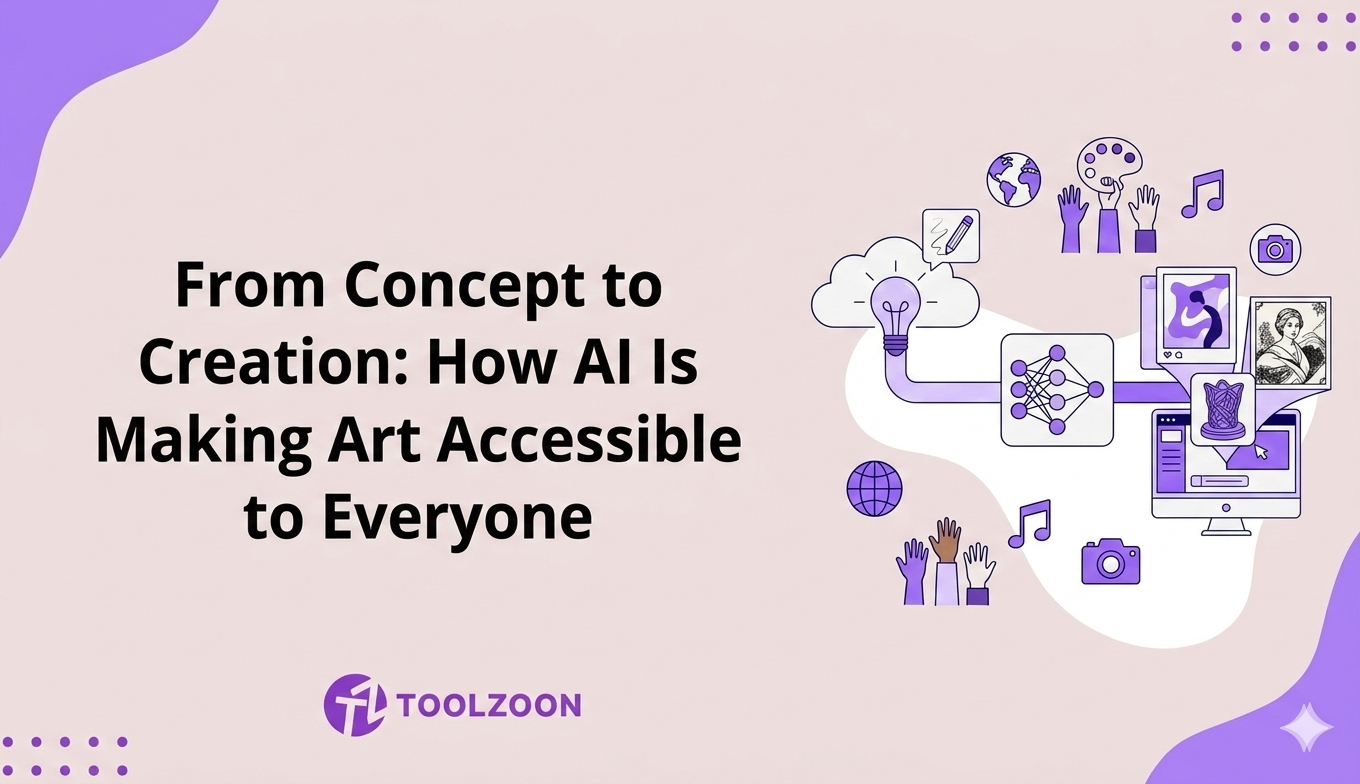
The process becomes simple: Idea → Prompt → Generate → Refine
This shift allows creators to focus on vision rather than technical skill.
Platforms like ImagineArt demonstrate how accessible AI creativity has become. As a browser-based platform, it allows users to generate high-quality visuals directly from text prompts without installing complex software or mastering professional design tools.
From Prompt to Artwork in Minutes
Modern AI tools allow nearly anyone to create:
- Social media graphics
- Digital illustrations
- Marketing creatives
- Concept art
- YouTube thumbnails
- Presentation visuals
A student preparing a project no longer needs stock images. A small business owner can create promotional banners without hiring an agency. A content creator can test multiple visual directions within minutes.
The speed of iteration reduces creative friction. If the first output is not ideal, the prompt can be refined instantly. This flexibility encourages experimentation and improves output quality over time.
Why an AI Image Editor Is Now Essential
Generation is only part of the process. Refinement is where true creative control emerges.
An AI image editor allows creators to modify specific elements without rebuilding the entire visual. Instead of manually selecting and masking areas, AI-powered editing tools understand image structure and context.
With intelligent editing, users can:
- Replace objects while maintaining lighting consistency
- Modify backgrounds without distorting perspective
- Enhance image resolution using AI upscaling
- Remove unwanted overlays or distractions
ImagineArt integrates advanced editing capabilities within its ecosystem. After generating an image, users can refine selected areas using AI-assisted tools rather than traditional manual methods. This keeps the workflow efficient and accessible even for beginners.
Real-World Applications of AI Art Tools
The democratization of art creation is visible across industries:
- Students use AI visuals in academic presentations.
- Entrepreneurs create product mockups for online stores.
- Writers generate character illustrations for storytelling.
- Game developers prototype environments quickly.
- Marketers design campaign visuals without extended production cycles.
In each case, AI reduces dependency on specialized design skills while maintaining visual quality.
Accessibility Beyond Skill and Budget
AI creativity tools are often browser-based and operate on flexible pricing models. This lowers entry barriers for users globally. Creators no longer need:
- Expensive creative suites
- Advanced graphic design training
- High-end hardware systems
- Outsourced design teams for basic visuals
The creative ecosystem becomes more inclusive. Individuals with strong ideas but limited resources can now participate in visual storytelling.
Creative Freedom Without Gatekeepers
Traditional workflows often required collaboration with designers or agencies for every visual concept. AI tools allow individuals to prototype independently before presenting ideas.
This autonomy accelerates innovation. Creators can test styles, experiment with compositions, and iterate without production delays.
AI does not replace human creativity. It amplifies it. The human provides direction, narrative, and intent. The AI accelerates execution.
Responsible Use and Ethical Considerations
While AI simplifies creation, responsible use remains critical. Creators must respect intellectual property, licensing rules, and ethical standards.
AI tools enhance productivity. They do not remove the need for judgment and originality. Strong results still depend on thoughtful prompts and careful refinement.
The Future of Accessible Creativity
The creative economy is shifting toward collaboration between human imagination and artificial intelligence. As models improve, personalization and visual precision will increase. Creative workflows will become faster and more intuitive. More individuals will participate in digital art creation.
The distance between concept and creation has never been shorter. With platforms like ImagineArt combining text-to-image generation and AI-powered editing in one accessible environment, creative expression is no longer restricted by skill barriers. It is driven by ideas.
FAQs
What does it mean that AI is democratizing art creation?
AI democratizes art by removing technical and financial barriers. Instead of mastering complex design software, users can generate visuals using simple text prompts and refine them with AI-powered editing tools.
Do I need design experience to use AI art tools?
No. Modern AI platforms are built for beginners and professionals alike. Tools like ImagineArt allow users to generate and edit images directly in the browser without advanced technical knowledge.
How does an AI image editor improve the creative process?
An AI image editor allows users to modify specific parts of an image, replace objects, enhance resolution, or remove unwanted elements without manual masking or layer work. This speeds up refinement and reduces technical complexity.
Can AI-generated art be used for commercial projects?
Yes, depending on the platform's licensing terms. Many AI tools allow commercial use, but users should always review usage policies and ensure ethical, responsible application.
Is AI replacing human creativity?
No. AI supports creativity by handling technical execution. The human creator still provides direction, imagination, and conceptual thinking. AI acts as a productivity tool rather than a replacement.
What types of projects can benefit from AI art tools?
AI tools are used for social media graphics, marketing visuals, concept art, presentation design, game prototyping, storytelling illustrations, and content creation across multiple industries.